
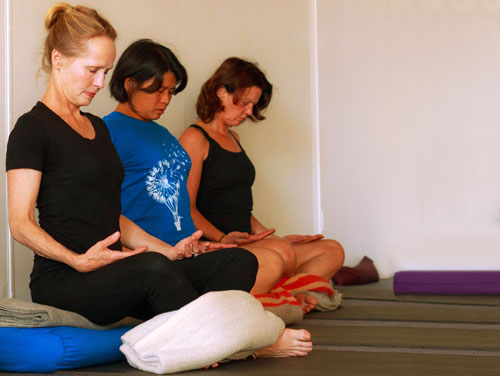
Understanding Pranayama
UDDIYANA KRIYA – MULADHARA KRIYA includes the ASHWINI KRIYA- JALANDHARA KRIYA
The breath is a gift you don’t own the breath but you very much own the breath, yogis used to measure their lives in breaths. Use the diaphragm, slightly pulls down in inhalation, relaxes on exhalation
LANGUAGE OF YOGA- COMMUNICATION BETWEEN BODY AND MIND AND BREATH
For UNDERSTANDING SUBJECTIVE AND PERCEPTUAL KNOWLEDGE Brings us into the now
Chompsky —Generative transformational grammar
Simple set of grammar rules you can create a limitless amount of sentences
Similarly, with a simple set of yoga instructions, you can create a limitless amount of asanas
A sequence of understanding – progressive sequences through intelligence and understanding
Not robotic, not dogmatic but with awareness and brain-mind to create perceptual intelligence – consciousness through a practise culture
1 SAMASTHITI- 2 Convergent rivers
2 UTTHITA HASTA PADASANA 2 Divergent rivers
3 UTTHITA PARSVA HASTA PADASANA Asymmetrical One river resisting one diverging
4 UTTHITA PARIVRITTA HASTA PADASANA Asymmetrical 2 opposing rivers
EQUAL AND OPPOSITE
THE DIRECTIONS ( PLANES OF THE BODY, DIMENSIONS, FORM)
LEFT AND RIGHT AND CENTRE PLUM OF GRAVITY- TRISHUL ENERGY IDA PINGALA SASHUMNA YING YANG
BACK= WEST- PASCHIMMA
FRONT-EAST-PURVA
NORTH – SOUTH UTTARA-DAKSHINA
THE 5 GREAT ELEMENTS ( PANCHA MAHA BHUTAS )
EARTH WATER FIRE AIR SPACE
THE 3 UNSEEN FORCES (GUNAS)
SATTVIC RAJASIC TAMASIC
ELECTROMAGNETIC ENERGY NUCLEAR FUSION GRAVITY
The STHITIS – Please study the all the Sthitis, you will find them on the front of the Preliminary Coursebook after the Prayer and the Preface in the Contents page.
The Hip Girdle and the Shoulder Girdle. The 4 major joints of movement, the ball sockets of the legs and arms
The 5 Organs of Action – KARMENDRIYAS
The 5 Great Elements – PANCHA MAHA BHUTAS & The 3 GUNAS (unseen forces-sattvic rajasic, tamasic-electromagnetic energy nuclear fusion gravity)
The 5 Sheaths (5 bodies) KOSHAS- Physical Physiological Psychological Mental Bliss
JOINTS get LOOSE MUSCLES Overused eg Frozen shoulder or Dislocated shoulder
SEQUENCING, Why and what are the benefits: Like a machine needs right sequencing so it keeps oiled and doesn’t get clogged up
EVERY ACTION has a REACTION ( law of karma and understanding our consciousness growing, evolving)
When you create an ACTION IN AN ASANA WHAT DO YOU LISTEN TO THE REACTION
SOMETIMES NO ACTION SHAVASANA OR UN ACTION
For example, I turn my right foot out 90 % what reaction does it have to my left foot
There are different types of ACTION AACTION or AAACTION
There is an order and reason to what we do, there is a natural sequence
But what are their reactions to the actions one needs intelligence reasoning awareness?
FIVE VAYUS – SAMANA VAYU – slightly pull in your abdomen in a soft way- feel the Transverse abdominal muscle the band around from the back, the inner and outer obliques
THE LATS – back of the Infraspinatus’ and teres minor-major, how we hold that area with the pectoral region
THE 3 DIRECTIONS-OF SPACE AND TIME_2 SIDES OF A COIN-THE CENTER -PIT_3 DIMENSIONAL CENTRE- SACRED GEOMETRY
WHEN YOU CLOSE YOUR EYES YOU GO INTO THE 4th DIMENSION, but it DOES’NT MEAN YOU LOOSE YOUR 3 DIMENSIONAL SKELETON, PHYSICS BODY HELPS US TO HOLD THE FRAME OF THE BODY
RELATIONSHIP BETWEEN PUBIS AND PELVIS
THE THIGH PINNING- LIKE A PROSPHETICH LEG – PINNING SHOULD BE FELT ALL THE WAY UP TO THE PELVIS- PELVIC HEADS ALWAYS IN-SUPPORTS WATR ELEMENT- WATER ELEMENT SOFT SPREADING- THEN STARTS- LOWER ABDOMEN- MIDDLE ABDOMEN (NAVEL) UPPER ABDOMEN 9SMOOTH MUSCLE_ ASCENDING AND DESCENDING COLON
PIN SOUTH AND NORTH THEN EAST AND WEST THEN LEFT AND RIGHT TO SCREW PIN ON (PIT)
SHOULDER PINS HORIZONTAL LEFT TO RIGHT- NORTH AND SOUTHWEST TO EAST
PLUM LINE FROM CROWN OF THE HEAD TO THE CENTRE OF THE PERENIUM